


For many homeowners, dealing with mold vs. mildew is the same. The appear to be similar but are definitely different. They both thrive in warm, damp areas and are types of fungi that can appear indoors. But knowing the difference between the two can help you take the right steps for cleanup and prevention—and protect your home in the process.
What Is Mold?
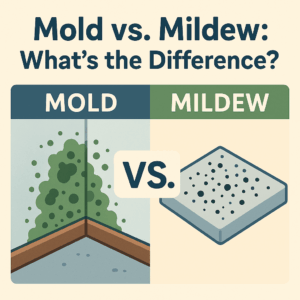
Mold is a type of fungus that grows in multicellular structures called hyphae. It tends to be fuzzy or slimy in texture and appears in various colors, such as black, green, yellow, or blue. Mold penetrates beneath the surface of materials, which makes it more difficult to remove. It can grow on drywall, wood, carpet, insulation, and other porous materials.
Mold growth is often a sign of a more serious moisture issue. Leaky roofs, pipe leaks, or flooding are common causes. If left unaddressed, mold can cause structural damage and potential health risks such as allergic reactions, asthma flare-ups, or respiratory infections.
What Is Mildew?
Mildew is a surface-level fungus that typically appears white, gray, or light brown. It’s powdery or fluffy in appearance and often grows in flat patches. Mildew is most commonly found on shower walls, windowsills, and other damp, non-porous surfaces.
While mildew is easier to clean than mold, it still signals excess moisture. If caught early, it can usually be wiped away with a household cleaner or diluted bleach solution. However, ignoring it can lead to mold growth and more significant problems.

Why understanding Mold Vs. Mildew Matters
Although they are both fungi, mold and mildew vary greatly in how they affect your home and health. Here are a few key distinctions:
Appearance: Mold tends to be darker and more deeply embedded; mildew is lighter and surface-level.
Health impact: Mold can cause more severe respiratory issues; mildew is generally less harmful but still a nuisance.
Cleanup: Mold often requires professional remediation; mildew can often be handled with DIY cleaning if addressed quickly.
Growth patterns: Mold spreads deeper into materials, while mildew stays more superficial.
When to Call a Professional
It’s important to act quickly when you spot fungal growth, but not every situation requires professional remediation. If you notice a small patch of mildew in your shower, regular cleaning products can usually do the trick. However, if you find mold growing on walls, ceilings, or in areas where water damage has occurred, it’s time to bring in experts.
Professional mold remediation companies have the tools and expertise to:
Identify the type and extent of fungal growth
Address underlying moisture issues
Safely remove contaminated materials
Prevent future outbreaks
Prevention Tips
The best way to deal with mold or mildew is to prevent them from forming in the first place. Here are a few simple habits that can help:
Keep indoor humidity below 60%
Clean and dry areas affected by water spills within 24 hours
Regularly inspect areas prone to moisture
Final Thoughts
Understanding the difference between mold and mildew can help you act faster and smarter when issues arise. While mildew may be more of a cosmetic concern, mold often indicates deeper water problems that require immediate attention. Knowing when to clean and when to call in the pros can protect both your health and your home.
If you suspect mold in your home and want peace of mind, contact TAU Restoration today. We’re here to help you assess, remediate, and restore with confidence.
RESTORE YOUR PROPERTY
We specialize in restoring both homes and businesses, employing expertise and dedication to help restore your property to its pre-disaster condition. If you’re in need of Mold Removal in Altamonte Springs, contact us today. We’re here to help!