


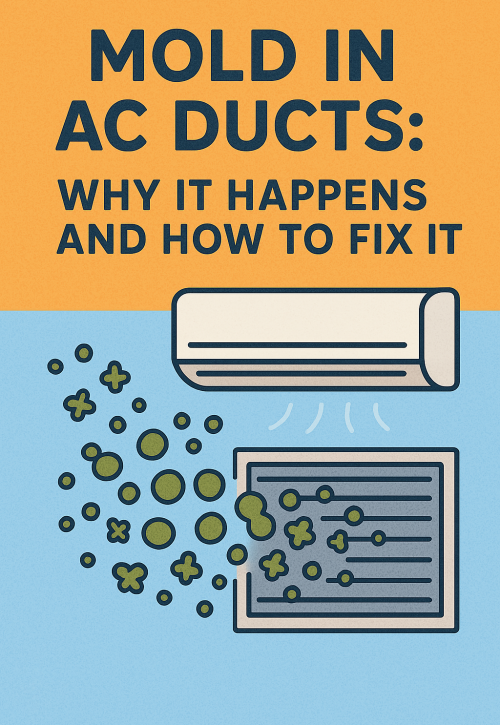
If you live in a warm, humid climate like Florida, chances are you’ve heard horror stories about mold in AC ducts. Mold can not only degrade your HVAC system’s performance but also pose serious risks to your family’s health and indoor air quality. Let’s explore why mold grows in air conditioning ducts, why it’s dangerous, and what you can do to fix and prevent it.
Why Mold Grows in AC Ducts
Mold is a fungus that thrives in damp, dark environments, and your HVAC system provides the perfect breeding ground if conditions are right. Here’s why:
Humidity: Florida’s high humidity levels create an ideal environment for mold spores to grow and spread. Even well-sealed ductwork can collect moisture through condensation.
Dust and Debris: Dust, pollen, and other organic materials accumulate inside ducts. When mixed with moisture, they provide a food source for mold.
Inadequate Drainage: If your HVAC system’s drainage is blocked or malfunctioning, water can collect in the ducts, encouraging mold growth.
Poor Insulation: Leaky or poorly insulated ducts can allow warm, moist air from outside to seep in, raising humidity levels inside the system.

Why Mold in AC Ducts is Dangerous
Mold in your HVAC system can cause more than just a musty smell; it can impact both your health and the efficiency of your home’s air quality:
Health Hazards: Mold spores released into the air can trigger allergic reactions, asthma attacks, headaches, fatigue, and other respiratory issues, especially in vulnerable individuals.
Air Quality: Mold compromises indoor air quality by spreading spores throughout your home every time the system runs.
System Damage: Left unchecked, mold can corrode metal components, damage insulation, and reduce the efficiency of your HVAC system.
How to Fix Mold in AC Ducts
If you suspect mold in your AC ducts, it’s important to address it promptly:
Professional Inspection: Engage a licensed HVAC contractor or mold remediation specialist to conduct a thorough inspection. They can assess the extent of the problem and recommend a treatment plan.
Duct Cleaning and Remediation: This typically involves:
Cleaning and disinfecting affected areas using EPA-approved fungicides.
Removing and replacing contaminated insulation.
Ensuring proper drying and sealing to prevent future growth.
System Repairs: If drainage issues or leaky ductwork caused the mold, repairing these problems is essential to prevent recurrence.
Preventing Mold Growth in AC Ducts
Prevention is the best defense against mold problems. Here are some steps you can take:
Regular Duct Inspections: Schedule annual or bi-annual inspections with a qualified HVAC technician to detect moisture or mold early.
Humidity Control: Use a dehumidifier to keep indoor humidity levels below 60%. Many modern HVAC systems include humidity controls that help manage moisture automatically.
Proper Insulation and Sealing: Ensure ducts are well-insulated and sealed to prevent warm, humid air from entering the system.
Filter Maintenance: Change HVAC filters regularly to reduce dust and organic debris that can fuel mold growth.
Final Thoughts
Mold in AC ducts is a common problem in Florida’s humid climate, but with proper care and maintenance, it can be effectively managed. By understanding why mold grows, recognizing the risks, and investing in regular inspections and preventative measures, you can keep your home’s air clean and your family healthy.
RESTORE YOUR PROPERTY
We specialize in restoring both homes and businesses, employing expertise and dedication to help restore your property to its pre-disaster condition. If you’re in need of Mold Removal in Altamonte Springs, contact us today. We’re here to help!