


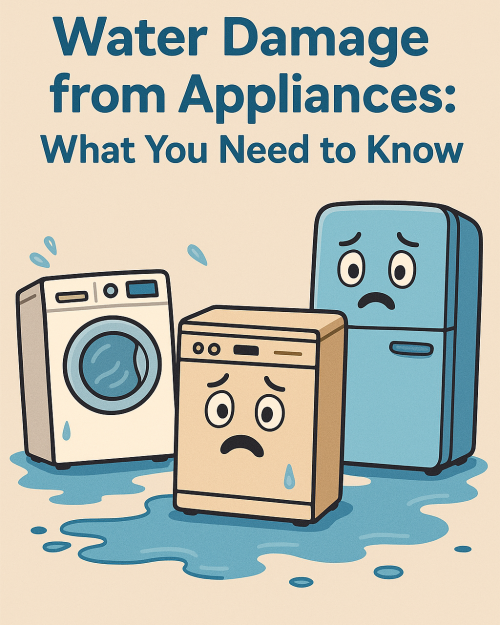
Water damage isn’t always caused by storms or floods. In fact, some of the most common sources are right inside your home—appliances. Washing machines, dishwashers, and refrigerators can all lead to costly water damage if not properly maintained. Understanding how and why these appliances fail can help homeowners avoid unexpected repair bills and potential mold issues.
Why Appliance Leaks Are So Common
Appliances are convenient, but they are also complex machines with multiple water connections, moving parts, and electronic systems. Over time, wear and tear can degrade hoses, seals, and fittings. Because most appliances are tucked away in corners, closets, or under counters, water damage from appliances can go unnoticed until significant damage has occurred. Regular inspections and preventive maintenance are key.
Washing Machines: High Risk for Leaks
Washing machines, especially those in upper floors or tight spaces, are notorious for causing water damage. The most common causes include:
Cracked or deteriorated hoses
Loose or improperly connected water supply lines
Drain line blockages causing overflow
Unbalanced loads leading to excessive vibration and movement
To reduce risk, check hoses every six months and replace them every 3-5 years with braided stainless steel hoses. Also, never overload the machine and ensure it sits level on the floor.
Dishwashers: Hidden Leaks and Drainage Issues
Because they are built into cabinetry, dishwasher leaks often go unnoticed until water has saturated the surrounding floor and baseboards. Problems typically arise from:
Failed door seals
Loose or disconnected drain hoses
Clogs in the drainage system
Cracks in the tub or pump housing
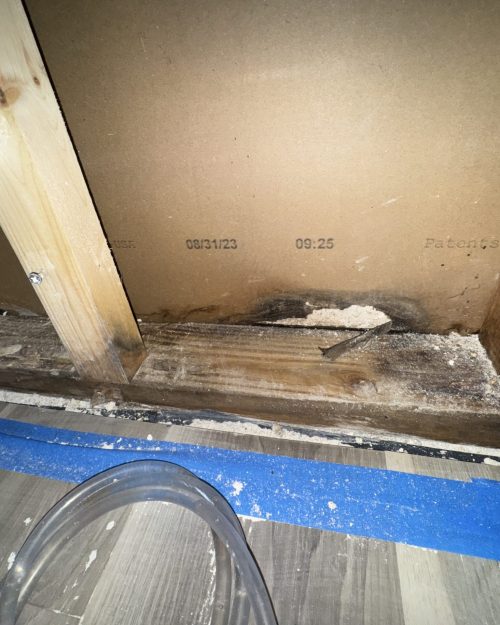
Watch for warped flooring near the appliance, musty odors, or water under the sink. These are telltale signs of a leak.
Refrigerators: Ice Makers and Water Lines
Modern refrigerators with ice makers or water dispensers rely on a constant water connection. These lines are often made from plastic tubing that can degrade over time or be damaged if the fridge is moved. Common risks include:
Kinked or cracked water supply lines
Poorly installed or deteriorated compression fittings
Slow leaks that pool beneath the unit unnoticed
Pull the refrigerator out a few times a year to check for signs of moisture or mold, and always use a copper or braided line when replacing the supply tubing.
How to Inspect Water Damage From Appliances
A quick visual check every month, even if everything looks fine, can prevent long-term damage. Here’s what to look for:
Hoses that are brittle, bulging, or corroded
Pooled water or damp spots near appliance bases
Mold, mildew, or a musty smell
Drip pans (especially under refrigerators) that are full or rusted
Also, consider installing water alarms or automatic shutoff valves to add an extra layer of protection, ensuring you’re prepared for any unexpected leaks or malfunctions.
When to Call a Professional
If you notice water damage such as discoloration, soft flooring, or mold growth, don’t wait. A professional inspection can determine the extent of the issue and help you prevent further damage. Mold, in particular, can develop within 24 to 48 hours after a leak begins, so quick action is critical.
Final Thoughts
Appliance-related water damage is preventable with awareness and simple maintenance. Take time each season to check your washing machine, dishwasher, and refrigerator for any early signs of wear or leakage. A few minutes now can save you thousands later.
RESTORE YOUR PROPERTY
We specialize in restoring both homes and businesses, employing expertise and dedication to help restore your property to its pre-disaster condition. If you’re in need of Mold Removal in Altamonte Springs, contact us today. We’re here to help!